News
Water-saving technologies are planned to be introduced on 80% of irrigated lands in Uzbekistan by 2028
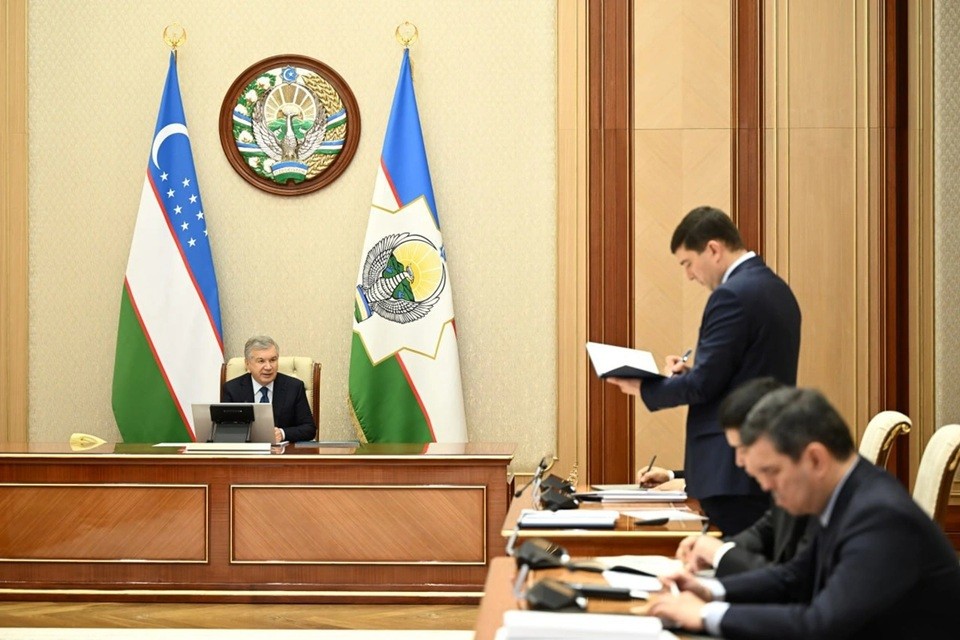
On February 3, President of Uzbekistan Shavkat Mirziyoyev got acquainted with a presentation on the efficient use of water resources and expanding the introduction of water-saving technologies,reportedpress service of the head of state.
By 2028, water-saving technologies are planned to be introduced on 930 thousand hectares, bringing their total area to 3.5 million hectares. This will amount to about 80% of all irrigated land. It is expected that this will save up to 3.5 billion cubic meters of water annually, improve water supply to 300 thousand hectares of land and provide irrigation for repeated crops.
Deputy Minister of Agriculture Alisher Shukurov, in an interview with the Uzbekistan 24 TV channel, said that it is planned to attract $744 million in funds from international financial institutions for projects in the field of agriculture and water management by the end of 2026. About 40% of this amount will be spent on rational management of water resources, increasing their efficiency and introducing resource-saving technologies.
According to the Deputy Head of the Presidential Administration for Reforming the Water Supply System Temur Butunbayev, the head of state was presented with nine scientific and practice-oriented proposals regarding the system for introducing water-saving technologies, government support measures, including subsidies, and strengthening state control.
To prepare them, consultations were held with almost 600 farmers and clusters, as well as with more than 20 equipment manufacturers.
Benefits and subsidies
At the meeting, it was proposed to determine tax rates and amounts of subsidies for water resources, taking into account the level of water supply to lands. In particular, when introducing water-saving technologies on lands with unstable water supply, subsidies will be calculated using an increasing factor of 1.25.
Deputy Minister of Water Resources Rustam Karshiev noted that previously subsidies for drip and sprinkler irrigation were provided on a single principle, without taking into account the water supply of the territories.
It is also planned to introduce a new subsidy system for agricultural producers who implement water-saving technologies at their own expense without using bank loans. Under this mechanism, 50% of the subsidy amount will be allocated in advance by the Agency for Payments in the Agrarian Sector on the basis of design estimates and an agreement with the contractor.
Subsidies will also be provided to areas where drip and discrete irrigation are used to grow grain crops. In addition, partial reimbursement of interest on loans from commercial banks for the purchase and installation of water-saving technologies is provided.
Deputy Minister of Agriculture Akmaljon Kosimov said that more than 800 billion soums have already been allocated for the introduction of water-saving technologies in agriculture.
“For the first time this year, a new mechanism is being introduced in cotton growing. Previously, farmers had problems replacing hoses from previously installed systems. Now, by decision of the president, these expenses will be covered through preferential loans,” he noted.
Loan funds for the introduction of drip irrigation in cotton fields are planned to be allocated annually from November. Contractors installing water-saving technologies will be required to provide a guarantee for a period of at least two years and provide service for five years.
In December, Minister of Water Resources Shavkat Khamrayevreported, that compared to 2024, water reserves in Uzbekistan, including transboundary reservoirs, decreased by 6.5 billion cubic meters. Reservoirs have stored less water. According to him, in 2026 it is planned to introduce water-saving technologies on 503 thousand hectares.
Source
Media Support