News for all
Uzbekistan imports more than 250 thousand heads of livestock from Europe, Belarus, China and Mongolia
Shavkat Mirziyoyev on Wednesdaygot acquaintedwith a presentation on measures to develop the livestock and poultry industries, as well as increasing the production of meat and dairy products.
At the event, it was noted that currently the annual demand for meat is 2 million 150 thousand tons, while production volume is about 1 million 600 thousand tons.
In this regard, a set of measures has been developed to increase the volume of livestock production in 2026-2028. It was noted that by restoring suspended enterprises, supporting areas specializing in livestock farming, and building light-weight cowsheds in households, it is possible to produce an additional 190 thousand tons of meat.
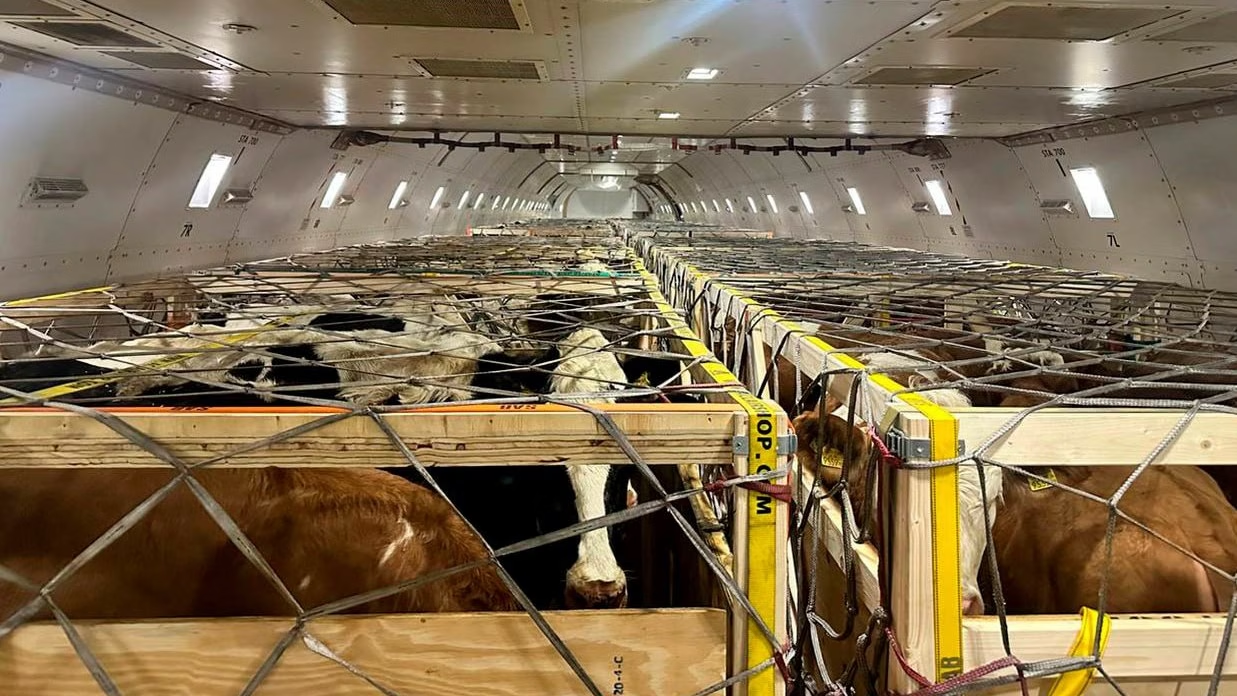
It is planned to import 150 thousand heads of sheep from Mongolia, 100 thousand heads of breeding cattle from China and European countries, and 2 thousand heads of cattle from Belarus. This will create the opportunity for additional production of 44 thousand tons of meat per year.
It is also planned to improve the health of 103 livestock enterprises that have suspended their activities. It was proposed to restructure their debt or provide the opportunity to repay in installments over 10 years, allocate land plots for growing fodder crops and provide enterprises with breeding stock. As a result, 33 thousand heads of cattle will be maintained, which will allow the annual production of 12 thousand tons of meat and 40 thousand tons of milk.
In general, it is planned to allocate funds in the amount of $463 million for the development of the livestock industry.
In the poultry farming sector, it is planned to implement projects worth a total of $432 million. Through these projects, it is planned to produce an additional 100 thousand tons of poultry meat by 2028, increase feed production capacity to 3.3 million tons, and also expand the coverage of modern slaughter systems from 20 to 50%.
Source
Media Support