News
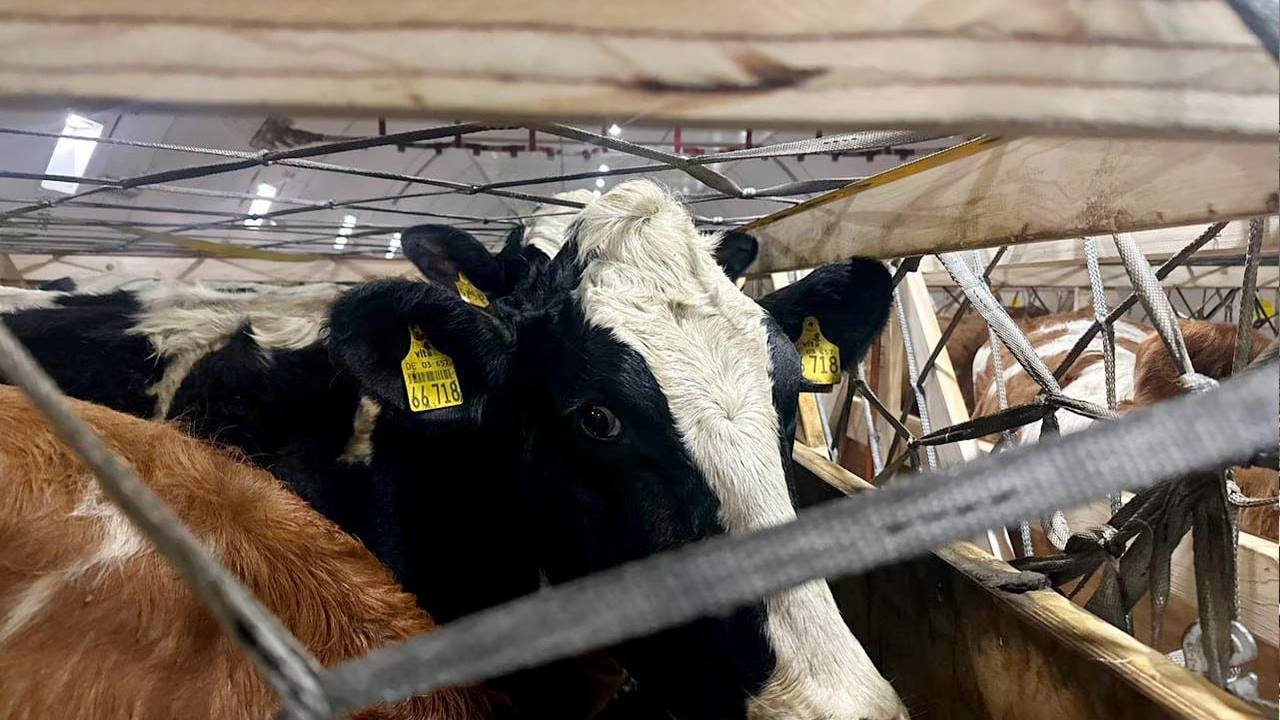
Import of breeding cattle, sheep and goats will be exempt from VAT until 2029
A presidential decree “On measures for the development of the livestock and pasture industry based on a modern management system and new approaches” was adopted.
According to the document, from June 1, 2026 to January 1, 2029The import of breeding cattle, sheep and goats into Uzbekistan from abroad will be exempt from value added tax.
From July 1, 2026 to January 1, 2030, a subsidy will be introduced for each breeding calf (identified) obtained from identified cows in households:
- for artificial insemination - 500 thousand soums;
— for embryo transfer (transplantation) - 700 thousand soums.
Starting from the 2027 harvest, feed crops will be allowed to be placed on half of the lands of agricultural organizations allocated for cotton and grains.
The document also provides for the creation of a new Agency for the Development of Livestock and Pasture Economy under the Ministry of Agriculture.
In addition, it is planned to organize 10-day training courses on artificial insemination in the Tashkent region. Specialists who successfully complete the training will be provided with the necessary equipment and supplies free of charge.
For entrepreneurs implementing projects in the field of livestock farming,preferential loans are provided for up to 10 years.In particular, funds will be allocated for the creation of complexes for breeding pedigree cattle.financing up to 5 billion soums.
The document alsoIt is permitted to use part of the irrigated land for the creation of livestock breeding facilities and the cultivation of fodder crops.
In addition, it is planned to digitalize the industry - a unified electronic platform will be introduced for recording livestock, breeding stock, investment projects and providing services to entrepreneurs.
In general, during 2026–2028 it is planned to increase the level of industrial processing of meat and dairy products to 50%, as well as to increase livestock productivity by increasing the share of breeding cattle to 90%.
Source
Media Support