News
At the session of the Jizzakh region, the organizational issue was considered and the main plans for the socio-economic development of the region were determined
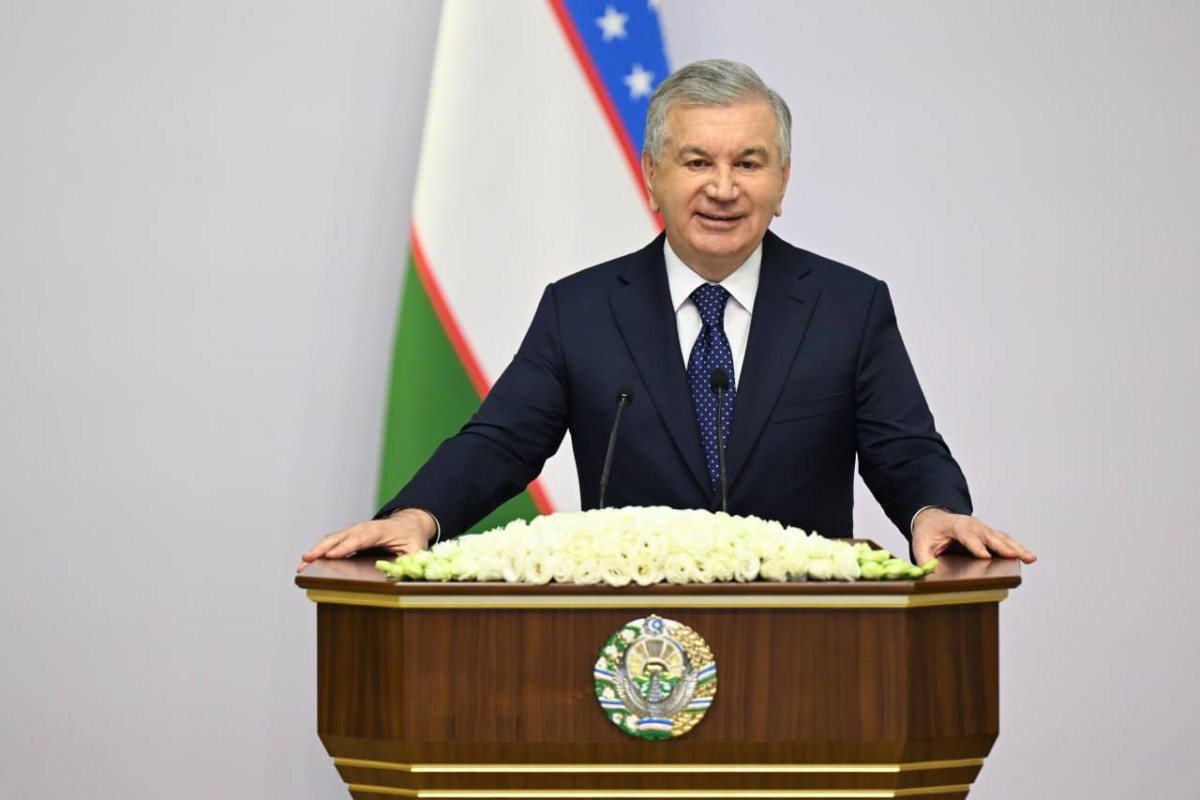
On December 2, an extraordinary session of the Kengash of People`s Deputies of the Jizzakh region took place. The President of the Republic of Uzbekistan Shavkat Mirziyoyev took part in its work.
“When I see what big changes are happening today in every district of Jizzakh, how happy people are, I am sincerely happy and proud of how we managed to get the region out of a difficult situation,” said the head of state, opening the meeting.
Over the past period, Jizzakh has turned into one of the most dynamically developing industrial regions of the country. Over eight years, investment projects worth $6.5 billion have been implemented here, of which 45 percent are in industry. The region has created a capacity to produce 175 thousand cars per year.
In the shortest possible time, more than 500 tourism and service facilities worth a total of $2 billion were put into operation in Zaamin, Farish, Arnasay districts and the city of Jizzakh. Thanks to the implementation of projects worth $300 million, year-round resort areas were opened in the Arnasay and Zaamin regions, and airports were built. Thanks to this, Jizzakh has become one of the most attractive tourist routes.
Eight years ago, 42 percent of the area`s jobs were in agriculture. Today, about 310 thousand residents of the region work in highly lucrative jobs in industry and the service sector.
Agriculture, long focused on cotton production, has also been deeply diversified. 28 thousand hectares of new gardens and vineyards have been created in Bakhmal, Gallyaaral, Zaamin, Yangiabad and Farish. On the steppe lands of Mirzachul, Dustlik, Zafarabad, Zarbdar, Pakhtakor and Arnasay, another 12 thousand hectares have been developed for gardens and vegetable plantations.
In general, over the past eight years, the volume of industry in Jizzakh has grown from 2.5 trillion to 25 trillion soums, the service sector - from 2.5 trillion to 20 trillion, agriculture - from 9 trillion to 30 trillion soums.
– Of course, this is only the beginning of our large-scale reforms. On the path of socio-economic development of Jizzakh, we still have a huge amount of work to do,” the President noted.
The organizational issue was discussed at the session. The head of state nominated Ulugbek Mustafoyev, acting khokim of the region, for the post of khokim of the Jizzakh region. Based on the voting results, his candidacy was approved.
The President outlined new initiatives for the development of industry, investment, tourism, agriculture, construction and infrastructure.
The share of Jizzakh in the national automobile industry has reached 25 percent. It was noted that the next task is to develop related industries around automobile plants, increase the level of localization and reduce costs.
Measures have been identified to support entrepreneurs: provision of ready-made production premises on favorable terms, compensation of 50 percent of the costs of component validation.
A project to extract 1 thousand tons of tungsten per year is being implemented in the region. After the commissioning of projects in Gallyaaral and Nurabad, Uzbekistan will be able to become one of the world`s leading producers of tungsten.
The responsible departments were instructed to attract an investor to the promising gold mining site in Gallyaaral, complete geological exploration work at the lead-zinc deposit in Farish, and prepare a feasibility study for the development of a uranium deposit in the Arnasay region.
Through the implementation of 30 projects worth $510 million in the Jizzakh free economic zone, employment of about 10 thousand people was provided. Work continues on $540 million worth of projects here. Entrepreneurs asked to provide the industrial zone with sufficient energy capacity and build treatment facilities.
The Ministry of Energy has been tasked with laying a 40-kilometer high-voltage power transmission line here and building a substation with a capacity of 40 megawatts. The program for the development of infrastructure of industrial zones for 2026 will provide for the construction of treatment facilities in the Jizzakh FEZ worth 100 billion soums.
To increase the energy supply of industry, 200 megawatts of capacity will be created this year, and another 300 megawatts next year. Additionally, 150 small and mini hydroelectric power stations with a total capacity of 30 megawatts will be commissioned.
About 10 trillion soums will be allocated to the region next year for the development of infrastructure and entrepreneurship.
It was noted that the unification of the mountainous territories of Bakhmal and Zaamin into a single tourist ring will make it possible to launch hundreds of service facilities, provide jobs for thousands of people and greatly increase the export of tourism services. It was ordered to begin repairs of the 158-kilometer section of the Zaamin - Bakhmal - Gallyaaral road next year. The initiative to create a tourism cluster in Bakhmal on an area of 39 hectares worth $40 million was supported. The area will be given tourist status.
The need to modernize Arnasay airport to accommodate large aircraft was separately noted. In addition, a railway will be built to Lake Aidar-Arnasay.
The President paid special attention to agricultural issues. It was noted that out of 900 thousand hectares of rain-fed and pasture lands, 110 thousand hectares are in reserve, and they can be brought into circulation for fodder, oilseed crops and industrial gardens, providing work for at least 20 thousand people.
Farmers and livestock producers in the area requested electricity subsidies for pumps earlier this month. An instruction was given to introduce such a system throughout the republic.
Jizzakh should become a model region for the development of potato growing. From 2026, new mechanisms to support potato growers will be introduced: annual loans at 12 percent with a six-month grace period for fertilizers, equipment and fuel; guarantee for 50 percent of the loan amount; compensation of half the cost of installing solar panels for pumps. In addition, starting next year, 50 percent of the energy costs for pumps will be compensated. Imported equipment for planting and harvesting potatoes will be exempt from customs duties.
A mechanism will also be introduced to reimburse 50 percent of the cost of storing super-elite and luxury seeds in cold storage facilities before distribution to farmers.
Additional support measures have been announced for Bakhmal gardeners: preferential loans at 14 percent for a period of 7 years with a three-year grace period for the creation of intensive gardens; subsidies for trellises from 20 to 70 thousand soums. For cold storage warehouses, part of the interest rate will be compensated - up to 8 percent above the base rate. Subsidies will be paid to fruit and vegetable exporters and gardeners to cover 50 percent of packaging costs.
In general, Bakhmal will create its own gardening experience, and then these benefits will be extended to the entire republic.
Together with American partners, a large breeding poultry factory is being created in Zaamin with a capacity of 100 thousand heads of breeding stock and the production of 9 million hatching eggs per year. This unique project will take the country`s poultry industry to a new level.
Discussing issues of construction and infrastructure, the President emphasized the need to bring social services, the labor market and infrastructure closer to residents of remote mahallas.
The National Committee for Urbanization and the regional khokimiyat was instructed, with the involvement of European experts, to develop a master plan for the development of the city of Jizzakh and the Sharaf-Rashidov district as a single agglomeration.
Taking into account the needs of the population, a 10-kilometer bypass road will be built to relieve traffic flow in Jizzakh. Work has begun on the construction of a new bridge over the railway between the village of Dashtabad and the Khavast district.
– Today, together with you, we have identified new tasks for the socio-economic development of the region and discussed key issues. The only goal of all these efforts and the decisions we make is to achieve the satisfaction of the people living and working here, to transform the region into a comprehensively developed territory,” the head of state emphasized, concluding the meeting.
During the session, reports from regional and district khokims, as well as the opinions of activists, were heard.
Source
Media Support